What Is Minimally Invasive Surgery?
Minimally invasive surgery refers to surgical techniques that accomplish the same goals as traditional open surgery but through smaller incisions — typically 5 to 12 mm. Rather than a single large incision, the surgeon uses several small ports through which a camera (providing a magnified view of the surgical field) and specialized instruments are introduced.
The two primary forms of minimally invasive surgery in general surgery are laparoscopic surgery and robotic-assisted surgery. Both reduce tissue trauma compared with open surgery, which translates to tangible benefits for patients: less post-operative pain, shorter hospital stays, smaller scars, and a faster return to normal activities. Dr. Abbassi offers both approaches at his Rockwall, McKinney, and Plano practices, serving patients throughout Rockwall County, Collin County, and North Texas.
Laparoscopic Surgery
Laparoscopic surgery has been widely used in general surgery since the early 1990s. The surgeon operates while viewing a two-dimensional image from a camera inserted through one of the small ports. Long, thin instruments are manipulated through the remaining ports. Laparoscopic techniques are the standard of care for many common procedures, including gallbladder removal, appendectomy, and many hernia repairs.
Robotic-Assisted Surgery
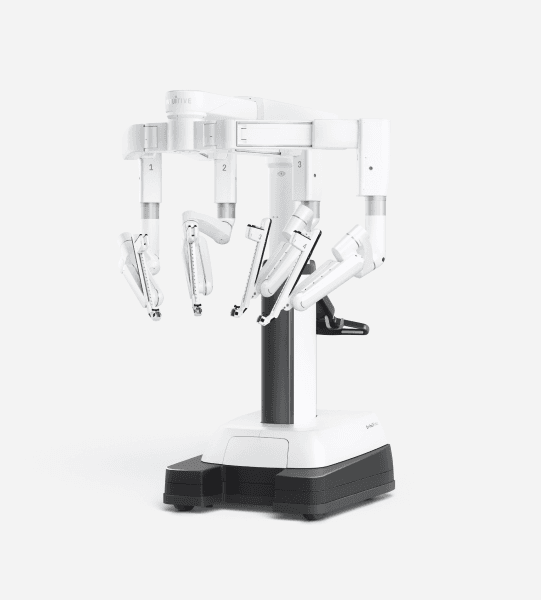
Robotic-assisted surgery builds on the principles of laparoscopy but adds significant technological advantages. The surgeon sits at a console and controls robotic arms that hold the camera and instruments. The system provides:
3D HD Visualization
A magnified three-dimensional view of the surgical field provides depth perception that standard laparoscopy cannot.
Enhanced Dexterity
Robotic instruments articulate with a range of motion that exceeds the human wrist, allowing precise movements in tight spaces.
Tremor Filtration
The system filters out natural hand tremor, enabling fine, steady instrument control during delicate dissection.
Ergonomic Advantage
The seated console position reduces surgeon fatigue during longer, more complex operations.
Important
The robot does not perform the surgery autonomously. The surgeon controls every movement. The technology is a tool that enhances the surgeon's capabilities — think of it as a highly advanced extension of the surgeon's hands.
Which Procedures Benefit from Robotic Assistance?
Dr. Abbassi uses robotic assistance when it offers a clear benefit to the patient. Not every procedure requires the robotic platform — and choosing the right tool for each case is a hallmark of thoughtful surgical care. Procedures where robotic assistance is particularly valuable include:
- Complex and recurrent hernia repair — precise mesh placement and tissue handling in challenging anatomic spaces
- Colon and rectal surgery — the confined space of the pelvis benefits from the articulation and visualization of robotic instruments
- Anti-reflux and hiatal hernia repair — delicate suturing around the esophagus and diaphragm
- Adrenalectomy — precise dissection around major blood vessels
- Abdominal wall reconstruction — component separation and mesh placement for large, complex defects
Robotic Surgery vs. Laparoscopic vs. Open
Across a range of procedures, minimally invasive techniques — whether laparoscopic or robotic — consistently demonstrate advantages over traditional open surgery:
- Less post-operative pain and reduced need for narcotic pain medication
- Shorter hospital stays — many procedures are performed on an outpatient (same-day) basis
- Smaller incisions and less visible scarring
- Lower rates of wound infection and other surgical site complications
- Faster return to work and daily activities
In complex cases, the additional precision of the robotic platform may further reduce operative time, blood loss, and complication rates. Learn more in our article: What Is Robotic Surgery? A Surgeon Explains.
Is Minimally Invasive Surgery Right for You?
Most general surgery procedures can be performed with minimally invasive techniques. However, factors such as prior surgical history, the severity of the condition, and body habitus may influence which approach is best. Dr. Abbassi evaluates each patient individually and recommends the approach that offers the best outcome — not the most technologically impressive one. During your consultation, he will explain the options and his reasoning clearly.
Dr. Abbassi's Training and Experience
Dr. Abbassi completed his general surgery residency at Texas Tech University Health Sciences Center, where he received training in both laparoscopic and robotic-assisted surgical techniques. He applies these skills across the full scope of his general surgery practice in Rockwall, McKinney, and Plano, TX, selecting the approach that best serves each patient's needs.
Frequently Asked Questions
Is robotic surgery safe?
Yes. Robotic-assisted surgery has an established safety record across hundreds of thousands of procedures performed worldwide. The surgeon maintains complete control at all times — the robotic system cannot act independently.
Does insurance cover robotic surgery?
In most cases, insurance covers the surgical procedure regardless of whether it is performed laparoscopically or with robotic assistance. The choice of technique is a clinical decision made by the surgeon. Our office can help verify your specific coverage.
How long is recovery from robotic surgery?
Recovery times are generally similar to laparoscopic surgery and significantly shorter than open surgery. Most patients return to normal activities within one to four weeks, depending on the specific procedure performed.