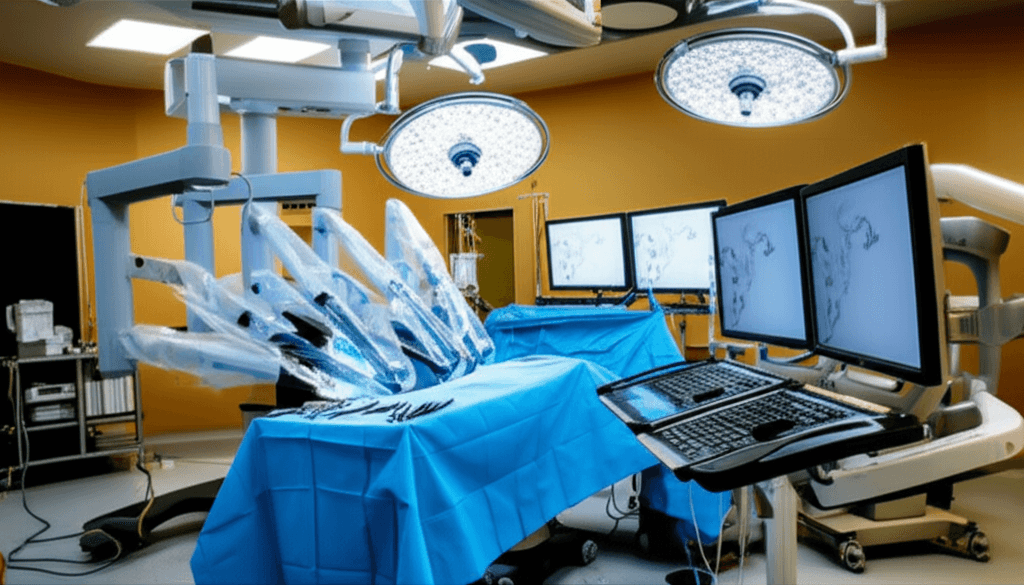
When patients hear the term "robotic surgery," they often picture a robot performing the operation independently. That is not how it works. Robotic surgery is a tool — a highly sophisticated one — that a trained surgeon uses to perform operations with greater precision. Here's what that actually means for you as a patient.
How Robotic Surgery Works
In robotic-assisted surgery, the surgeon sits at a console in the operating room and controls robotic arms that hold the surgical instruments and camera. The surgeon's hand movements are translated into precise, scaled movements of the robotic instruments inside the patient's body.
The key elements of the system:
- Three-dimensional, high-definition camera: Unlike standard laparoscopic surgery, which provides a two-dimensional image, the robotic camera provides depth perception. The surgeon sees the surgical field in 3D, magnified up to 10 times.
- Wristed instruments: The robotic instruments can bend and rotate in ways that the human hand cannot. This is particularly valuable when working in tight spaces — like the pelvis during colon surgery or around the esophagus during reflux surgery.
- Tremor filtration: The system filters out the natural small tremors of the human hand, resulting in smoother, steadier movements.
The Robot Does Not Operate on Its Own
This is the most important point: the surgeon controls every movement. The robot cannot act independently. It does not make decisions. It does not move unless the surgeon directs it. Think of it as a highly advanced extension of the surgeon's hands — one that offers capabilities beyond what unassisted hands can achieve.
Which Procedures Benefit Most?
Robotic assistance is not necessary for every surgery. Straightforward procedures may be performed just as well with traditional laparoscopic techniques. Where robotic technology shines is in procedures that demand:
- Working in confined spaces — colorectal surgery in the narrow pelvis, for example
- Precise suturing — anti-reflux procedures where the wrap around the esophagus must be exact
- Complex dissection — recurrent or large hernia repairs and abdominal wall reconstruction
- Delicate tissue handling — adrenal surgery near major blood vessels
What Does This Mean for Your Recovery?
Whether performed laparoscopically or with robotic assistance, minimally invasive surgery offers the same core benefits over open surgery:
- Smaller incisions (typically 8–12 mm)
- Less post-operative pain
- Shorter hospital stays — many procedures are same-day
- Faster return to work and daily activities
- Lower risk of wound complications
In complex cases, the additional precision of the robotic platform may further reduce operative time, blood loss, and complication rates — though outcomes ultimately depend on the skill and judgment of the surgeon, not the machine alone.
How Dr. Abbassi Uses Robotic Surgery
Dr. Abbassi trained in both laparoscopic and robotic-assisted techniques during his general surgery residency at Texas Tech University Health Sciences Center. He uses the robotic platform selectively — choosing it when it offers a genuine advantage for the patient, not as a marketing tool. During your consultation, he will explain which approach he recommends for your specific procedure and why.
Questions to Ask Your Surgeon
If you are told your procedure will be done robotically, good questions to ask include:
- Why is the robotic approach preferred over laparoscopic for my case?
- How many of these procedures have you performed robotically?
- Will the recovery be different compared with a laparoscopic approach?
- Are there additional costs associated with robotic surgery?
A surgeon who uses robotic technology thoughtfully will be happy to answer these questions directly. Learn more about robotic and minimally invasive surgery at Abbassi Surgical Associates.
Dr. Abbassi sees patients at our Plano clinic and across North Texas. To discuss your options, schedule a surgical consultation or call (469) 203-8856.

Dr. Babak Abbassi, MD, MBA, MS
Board-certified general surgeon specializing in minimally invasive and robotic surgery in Rockwall, McKinney, and Plano, TX.
About Dr. Abbassi