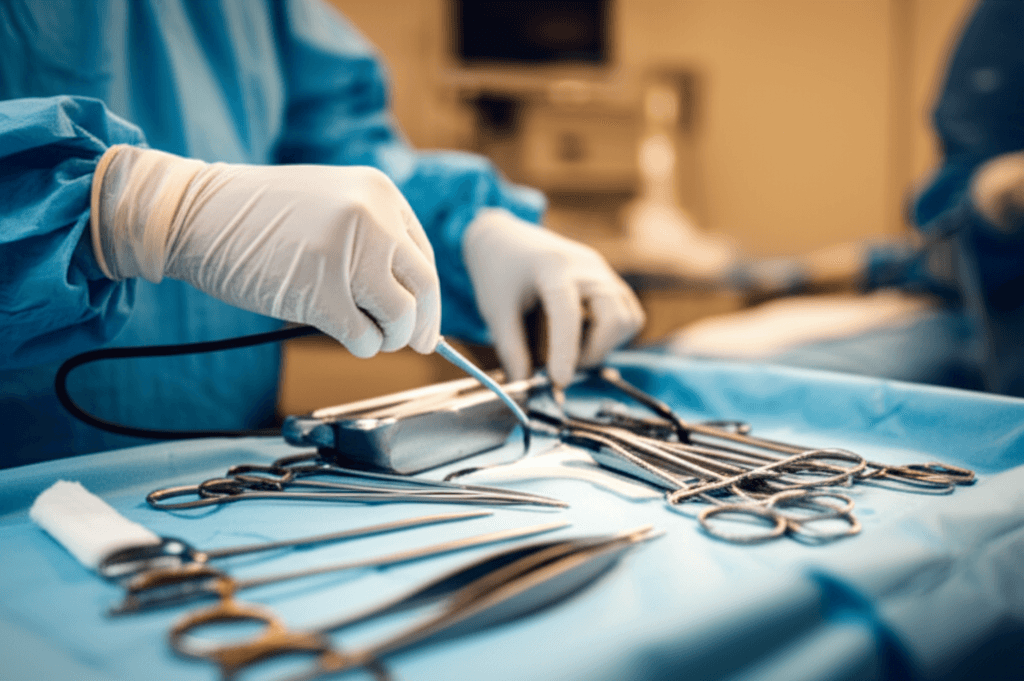
What Is a Hernia?
A hernia occurs when an organ or tissue pushes through a weak spot in the surrounding muscle or connective tissue. The most common types involve abdominal contents — typically fat or a loop of intestine — protruding through the abdominal wall. Hernias do not resolve on their own and generally require surgical repair to prevent complications.
Dr. Abbassi is a board-certified general surgeon serving patients in Rockwall, McKinney, Plano, and the surrounding North Texas communities with expert hernia diagnosis and repair.
of all abdominal wall hernias are inguinal (groin) hernias, making them the most common type requiring surgical repair.
National Institute of Diabetes and Digestive and Kidney Diseases (NIDDK)
Types of Hernias Dr. Abbassi Treats
Inguinal (Groin) Hernia
Inguinal hernias are the most common type, accounting for roughly 75% of all abdominal wall hernias according to the National Institute of Diabetes and Digestive and Kidney Diseases (NIDDK). They occur when tissue pushes through a weak point in the groin area, in or near the inguinal canal. Inguinal hernia surgery is far more common in men than women.
Umbilical Hernia
An umbilical hernia develops at or near the navel when abdominal tissue protrudes through the umbilical ring. While common in infants — where many close naturally — umbilical hernias in adults typically require surgical repair, particularly when they enlarge or cause discomfort.
Ventral and Incisional Hernia
Ventral hernias occur through any opening in the front of the abdominal wall. An incisional hernia is a specific type that develops at the site of a prior surgical incision. Studies suggest incisional hernias occur after roughly 10–15% of abdominal surgeries, with higher rates following open procedures.
Recurrent and Complex Hernias
Some hernias return after a previous repair. Recurrent hernias often require a different surgical approach than the original operation. Dr. Abbassi has experience with complex and multi-recurrent hernias, including cases requiring component separation and hernia mesh repair.
When Is Hernia Surgery Needed?
Not all hernias require immediate surgery, but most will eventually need repair. Surgery is typically recommended when a hernia:
- Is growing larger over time
- Causes pain, discomfort, or a heavy or dragging sensation
- Interferes with daily activities or work
- Cannot be pushed back in (irreducible hernia)
- Shows signs of incarceration or strangulation — a surgical emergency where blood supply to the trapped tissue is compromised
Emergency Warning
Signs of a strangulated hernia — severe, sudden pain at the hernia site, nausea, vomiting, fever, or a hard, tender bulge that changes color — require immediate emergency care. Call 911 or go to your nearest emergency room.
A surgical consultation allows Dr. Abbassi to evaluate the hernia, discuss your symptoms, and determine the most appropriate timing and approach for repair. Learn more in our article: Do I Need Surgery for My Hernia?
Surgical Approaches
Laparoscopic Hernia Repair
Laparoscopic repair uses several small incisions (typically 5–12 mm) through which a camera and specialized instruments are inserted. This technique allows visualization and repair of the defect from inside the abdomen. Benefits include reduced post-operative pain, smaller scars, and a faster return to normal activities compared with traditional open repair.
Robotic-Assisted Hernia Repair
Robotic-assisted surgery provides the surgeon with three-dimensional visualization, enhanced instrument dexterity, and greater precision during tissue handling and suturing. These advantages are particularly beneficial for complex, bilateral, or recurrent hernias where precise dissection and mesh placement are critical.
Open Hernia Repair
In some cases — particularly small inguinal hernias or situations where a patient has had extensive prior abdominal surgery — an open approach with a single incision directly over the hernia may be the most appropriate choice. Dr. Abbassi determines the best approach based on the individual circumstances of each patient.
Recovery After Hernia Surgery
Most patients undergoing laparoscopic or robotic hernia repair return home the same day. Recovery timelines vary depending on the type and complexity of the hernia:
- Return to light activity: typically within a few days
- Return to work (desk jobs): often within one to two weeks
- Return to strenuous activity and heavy lifting: generally four to six weeks, per surgeon guidance
Dr. Abbassi provides detailed post-operative instructions tailored to each patient and is available to answer questions throughout the recovery process.
Why Choose Dr. Abbassi for Hernia Surgery?
- Board-certified general surgeon with advanced training in minimally invasive and robotic techniques
- Experience with straightforward and complex hernia repairs, including recurrent hernias and abdominal wall reconstruction
- Personalized surgical planning — the approach is selected based on your anatomy and hernia type, not a one-size-fits-all protocol
- Direct physician access before and after surgery — you speak with Dr. Abbassi, not a gatekeeper
- Three convenient locations in Rockwall, McKinney, and Plano, TX, serving patients throughout Rockwall County, Collin County, and North Texas
Frequently Asked Questions
How long does hernia surgery take?
Most laparoscopic or robotic hernia repairs take 45 minutes to 90 minutes, depending on the type and complexity of the hernia. Complex or recurrent hernias may take longer.
Is hernia surgery covered by insurance?
Yes. Hernia repair is a medically necessary procedure and is covered by most insurance plans. Our office can help verify your coverage before scheduling.
Can I drive after hernia surgery?
Most patients can resume driving within a few days to one week after surgery, once they are no longer taking prescription pain medication and can comfortably perform an emergency stop. Dr. Abbassi will provide specific guidance based on your procedure.
What is the recurrence rate after hernia repair?
In experienced hands, recurrence rates for laparoscopic and robotic hernia repair are low — typically under 5% for primary hernias and somewhat higher for recurrent or complex repairs. Proper technique, appropriate mesh selection, and following post-operative activity restrictions all contribute to durable results.
How do I know which type of hernia repair is right for me?
The best approach depends on your hernia type, size, location, prior surgical history, and overall health. During your consultation, Dr. Abbassi will evaluate your hernia and discuss whether a laparoscopic, robotic, or open repair is most appropriate for your individual situation — not a one-size-fits-all protocol.