
If your primary care doctor or radiologist has just told you they're sending you to a surgeon for a breast lump, I know exactly what happened next: your mind jumped straight to the worst-case scenario. The word "surgeon" lands hard. So let me start where I'd start in the exam room — with the honest, reassuring truth. The large majority of breast lumps are benign. Being referred to a surgeon does not mean you have cancer. It means someone wants the right specialist to look closely and give you a clear answer. Here's what that actually involves.
Why You Were Sent to a Surgeon
A general surgeon who treats breast problems often is, in many ways, the right person to organize and interpret a breast workup. Your primary care doctor may have felt a lump on a routine exam. A radiologist may have flagged something on a mammogram or ultrasound that deserves a closer look. Either way, the referral is about getting you to someone who does this every week and can move efficiently from "we found something" to "here's what it is and here's the plan."
I want to be clear about something I tell patients constantly: a referral is not a diagnosis. It's a step toward certainty. Uncertainty is the hardest part of this process, and the whole point of seeing a surgeon is to shorten it.
The Workup: How We Figure Out What a Lump Is
A good breast evaluation is methodical, and it usually rests on three things working together — what we feel, what imaging shows, and, when needed, what a sample tells us.
- The clinical exam. I examine both breasts and the lymph node areas under the arms and around the collarbone. I'm noting the size, shape, mobility, and texture of the lump, and whether anything has changed since you first noticed it. Many findings are reassuring on exam alone — a smooth, mobile, rubbery lump in a younger patient often behaves like a benign fibroadenoma or a cyst.
- Imaging. Depending on your age and what was already done, this may include a diagnostic mammogram, a targeted ultrasound, or occasionally an MRI. Ultrasound is especially good at telling a simple fluid-filled cyst — almost always harmless — apart from a solid mass that warrants sampling.
- A breast biopsy, when indicated. If the exam and imaging cross a threshold, the only way to know for certain what a lump is made of is to look at the cells under a microscope. This is where a breast biopsy comes in, and it's far less involved than most people imagine.
Needle Biopsy vs. Surgical Biopsy
When people hear "biopsy," they often picture an operation. In modern practice, that's usually not the case.
- Needle biopsy. Most breast lumps that need sampling are biopsied with a needle, in the office or imaging suite, under local anesthesia. A core-needle biopsy removes thin samples of tissue through a tiny nick in the skin; a fine-needle aspiration can drain or sample a cyst. You're awake, it takes minutes, and you go home with a small bandage. This is the workhorse of breast diagnosis, and it answers the question for the vast majority of patients.
- Surgical (excisional) biopsy. Occasionally a needle biopsy is inconclusive, or the lesion is in a spot or of a type that's better removed in full to be certain. In those cases we remove the lump in a minor operation. This is the exception, not the rule — and even then, removal often turns out to be both the diagnosis and the cure.
The biopsy result is what drives everything that follows. I'd much rather we get a definite answer from a small needle sample than guess from an exam.
If the Lump Is Benign
This is, statistically, the most likely outcome — and the most common conversation I have. Benign findings like cysts, fibroadenomas, and areas of normal dense tissue often need nothing more than reassurance and a plan to keep an eye on things. Sometimes we remove a benign lump anyway, if it's growing, painful, or simply bothering you. But "benign" usually means you can exhale and get back to your life.
If It's Something That Needs Treatment
If a biopsy shows cancer or a lesion that should come out, the next step is a calm, specific plan — not a scramble. For many early breast cancers, the operation is a lumpectomy (also called breast-conserving surgery): we remove the tumor with a rim of healthy tissue around it while preserving the breast. Depending on the situation, we may also sample a lymph node or two from under the arm to check whether anything has spread. A lumpectomy is frequently an outpatient procedure, and recovery is typically faster and gentler than patients expect. The details — margins, lymph nodes, whether other treatment is recommended — are worked out together, and you can read more about how we approach these operations on our breast surgery page.
When You Shouldn't Wait to Be Seen
Most breast lumps are not emergencies, and a week or two of careful workup is normal. But please be evaluated promptly — not in a few months — if you notice a new lump that's hard and fixed in place, skin dimpling or puckering, nipple changes or new bloody discharge, redness and swelling of the breast, or a lump that's clearly growing. None of these automatically means cancer, but all of them mean you shouldn't wait and wonder.
The Bottom Line
A breast lump deserves a thorough, unhurried evaluation by someone who treats them often — and that thoroughness is exactly why you were sent to a surgeon. Most lumps turn out to be benign, most biopsies are done with a needle, and most patients leave with relief rather than a diagnosis to dread. The fastest way out of uncertainty is a clear workup, not the internet.
In my practice, patients come from Rockwall, McKinney, Plano, and across north and northeast Dallas for exactly this kind of straight, reassuring guidance. You get direct access to Dr. Abbassi — not a rotating cast of providers — and we offer same-week surgical consultations so you're not left waiting in the worst kind of suspense. If you've found a lump or been referred for one, request a consultation or call us at (469) 203-8856. We'll examine it, explain what we see, and tell you honestly what comes next.
Dr. Abbassi sees patients at our McKinney clinic and across North Texas. To discuss your options, schedule a surgical consultation or call (469) 203-8856.
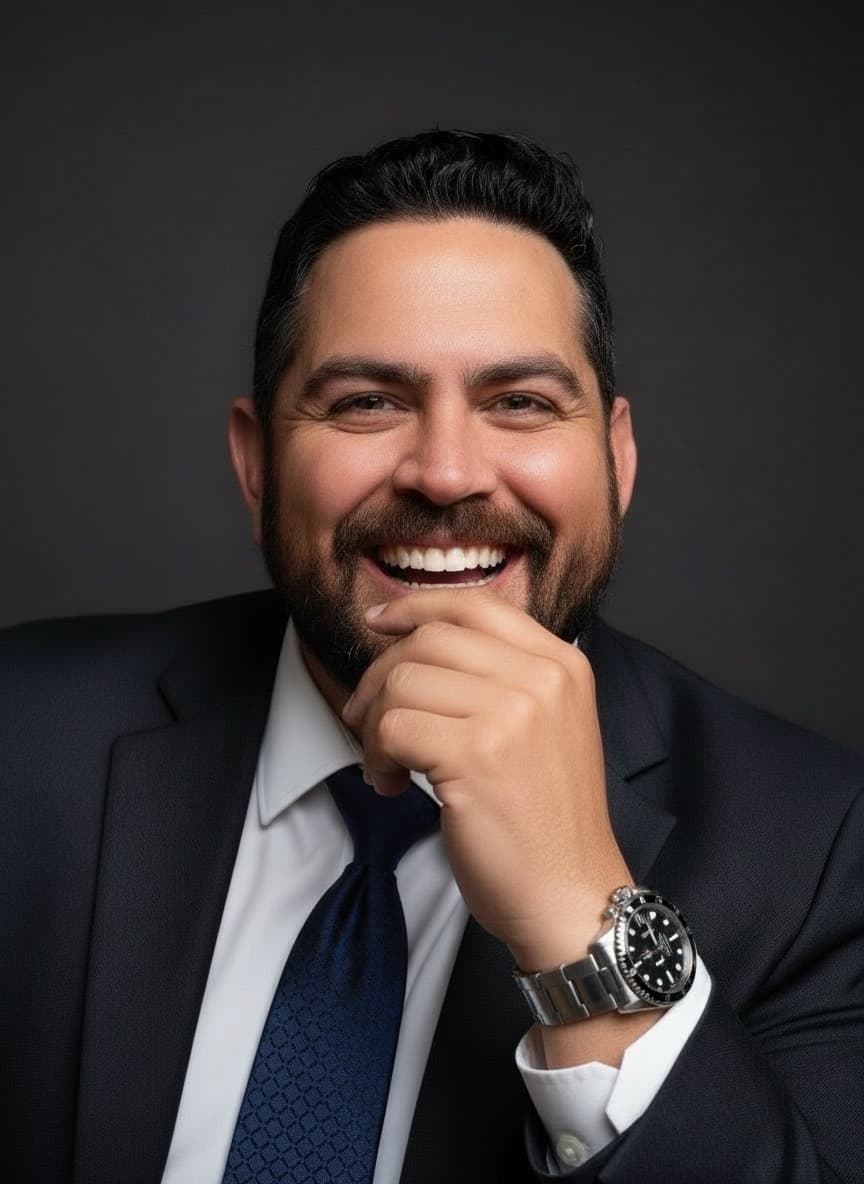
Dr. Babak Abbassi, MD, MBA, MS
Board-certified general surgeon specializing in minimally invasive and robotic surgery in Rockwall, McKinney, and Plano, TX.
About Dr. Abbassi